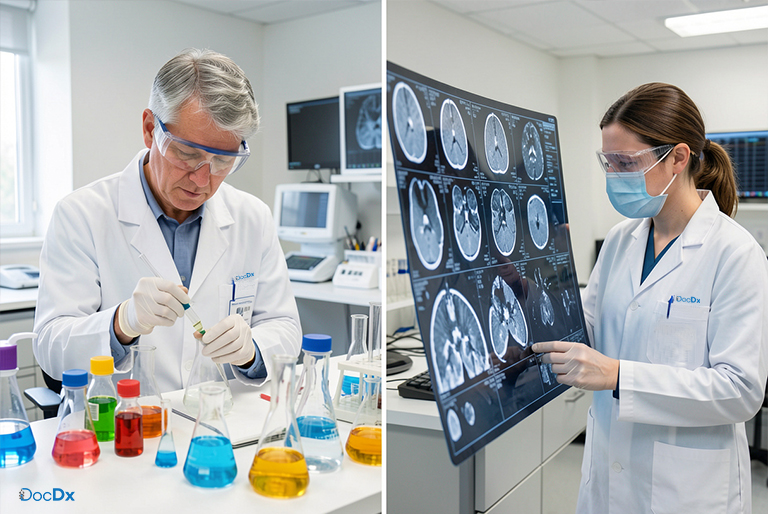
Lab testing is an important part of modern medicine. It helps doctors detect diseases, monitor health conditions, and make decisions about treatment. Doctors often suggest tests to learn more about what’s going on inside the body when someone has symptoms or is getting routine screenings. Medical imaging and laboratory testing are two of the most common ways to diagnose a problem.
Knowing the difference between lab tests and imaging and when each is needed can help patients feel more sure when doctors suggest certain tests. Both methods try to find out about health problems, but they do different things. Lab tests look at biological samples like blood or urine to see if there are any chemical changes in the body. On the other hand, imaging techniques make pictures of organs, bones, and tissues that you can see.
Understanding Diagnostic Testing in Modern Medicine
Diagnostic testing plays a central role in modern healthcare. Without reliable testing methods, identifying diseases would rely heavily on guesswork. Today’s medical professionals use a combination of tools to investigate symptoms and confirm diagnoses.
What Are Lab Tests?
Lab tests analyze samples taken from the body. These samples often include blood, urine, saliva, or tissue. Scientists and technicians examine these samples in controlled laboratory environments using specialized equipment.
The goal of lab testing is to detect chemical, biological, or cellular changes that may indicate disease. For example, blood tests can measure cholesterol levels, blood sugar, hormones, and infection markers.
Lab testing is commonly used for:
- Monitoring chronic conditions
- Detecting infections
- Evaluating organ function
- Screening for diseases
Because laboratory tests analyze biological markers, they provide valuable insights into how the body is functioning internally.
What Is Medical Imaging?
Medical imaging involves using specialized machines to create visual representations of the inside of the body. These images allow healthcare providers to examine bones, tissues, and organs without performing surgery.
Common imaging methods include:
| Imaging Method | Purpose | Example Uses |
| X-ray | View bones and dense tissues | Fractures, lung infections |
| CT Scan | Detailed cross-section images | Tumors, internal bleeding |
| MRI | Soft tissue imaging | Brain, spine conditions |
| Ultrasound | Real-time imaging | Pregnancy, organ scans |
Each imaging technique uses different technology such as radiation, magnetic fields, or sound waves.
These visual tools allow doctors to detect structural problems that may not appear in lab tests.
Why Accurate Diagnosis Matters
Accurate diagnosis is the foundation of effective treatment. When healthcare providers identify the exact cause of symptoms, they can recommend the most appropriate therapies.
Preventive Healthcare and Screening
Preventive healthcare focuses on identifying health issues before symptoms appear. Both lab tests and imaging procedures play important roles in preventive medicine.
Blood tests can detect high cholesterol or abnormal glucose levels long before a person experiences complications. Imaging scans can identify tumors or structural abnormalities early in their development.
Early detection often leads to better outcomes because treatment can begin sooner.
Clinical Decision Making
Doctors rely heavily on diagnostic information when making treatment decisions. Symptoms alone rarely provide enough evidence to confirm a condition.
By combining lab results with imaging data, healthcare providers can build a comprehensive understanding of a patient’s health. This approach improves diagnostic accuracy and reduces the risk of misdiagnosis.
When Lab Testing Is Necessary
Lab testing is especially useful when doctors need to evaluate the body’s internal chemistry.
Blood Tests for Internal Conditions
Blood tests are among the most commonly ordered medical tests. They provide valuable information about multiple body systems.
Common blood tests include:
- Complete blood count (CBC)
- Lipid panel
- Blood glucose testing
- Hormone analysis
These tests help identify infections, metabolic disorders, and immune system problems.
Urine and Tissue Testing
Urine testing is frequently used to evaluate kidney function and detect infections. Tissue biopsies, another type of lab analysis, allow doctors to examine cells under a microscope.
Biopsies are often used to confirm cancer diagnoses or evaluate abnormal tissue growth.
When Medical Imaging Is Necessary
While lab tests analyze biological markers, imaging focuses on visualizing the body’s physical structures.
Imaging for Injuries and Trauma
Imaging is particularly valuable for diagnosing injuries. X-rays are commonly used to detect broken bones, while CT scans can reveal internal bleeding.
Emergency departments rely heavily on imaging tools to quickly evaluate trauma patients.
Imaging for Internal Organ Problems
Imaging scans also help detect conditions affecting organs such as the lungs, brain, liver, and kidneys.
MRI scans are particularly effective for examining soft tissues, while ultrasound is commonly used to monitor pregnancy and evaluate abdominal organs.
Comparing Lab Tests vs Imaging
Both diagnostic methods offer unique advantages.
Speed and Accuracy
Lab tests often provide rapid results for detecting infections or metabolic conditions. Imaging scans, however, provide visual confirmation of structural abnormalities.
Cost and Accessibility
| Factor | Lab Tests | Imaging |
| Cost | Usually lower | Often higher |
| Equipment | Laboratory instruments | Advanced imaging machines |
| Purpose | Chemical analysis | Structural evaluation |
Doctors choose the appropriate test depending on symptoms and clinical needs.
Conclusion
Patients can make better decisions about their health care when they know when to use lab tests and when to use imaging. Imaging techniques show the structure of organs and tissues, while laboratory tests look at the body’s internal chemistry. Both methods are very important in modern medicine, and they often work together to give a full picture of a patient’s health.
As medical technology gets better, diagnostic tools will get more accurate and easier to use. Healthcare will always focus on finding problems early, making sure they are corrected, and giving each patient the best care possible. Patients can take an active role in their own health journeys and make smart choices with the help of healthcare professionals if they know what these diagnostic tools are for.